
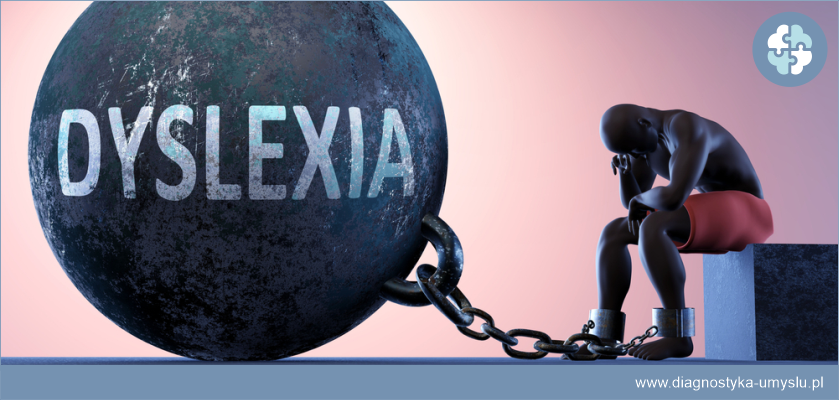
Disorders of the sensory organs are the cause of dyslexia.
Dyslexia is not due to abnormalities of the sensory organs. However, a child at risk of dyslexia can be a child who comes from an abnormal pregnancy and birth, who has a family history of these disorders, and a child who shows symptoms of disharmonious psychomotor development.
Children who write letters backwards have dyslexia.
No, young children often do.
Dyslexia results from didactic neglect, such as not reading books to the child.
It is possible that the predisposition is hereditary, but it can be worked on and reading skills, spelling skills, memory training, etc. can be developed. It is important to take care of the child’s development and reading books to the child can certainly alleviate the symptoms of dyslexia.
Dyslexia can be cured.
You can’t. A dyslexic person has a different brain structure and therefore looks at the world differently. This does not mean that such a person will be lost in the reality around them. If properly supported, a dyslexic can achieve great things.
It is enough to write something many times to remember it.
Sometimes this helps, but it is still important to remember that dyslexics remember things differently and have a different perception than the average person.
Dyslexia looks the same in everyone.
No, every dyslexic student is different.
A dyslexic is an unintelligent person.
No, dyslexia is diagnosed in children with at least an average level of intelligence. There are often above-average intelligent people with dyslexia, as we mentioned above.
Dyslexia is an excuse.
No, it is a neurological disorder that requires the right approach. Yes, not every child with a learning disability is dyslexic, which is why specialist diagnosis is so important.
Is there a test for dyslexia?
Yes. There are several dyslexia tests currently available on the market including: DEST-2, DST-J, DST-S or DAST. You can use our dyslexia test. Although it has no scientific value, it still fulfils its purpose – a preliminary psychological assessment (degree of probability).
Source:
- http://poradnia-przemysl.com.pl/index.php/specyficzne-trudnosci-w-nauce/

